


Unfreeze Your Shoulder; Reclaim Your Active Life
How Physical Therapy Can Help You Manage Frozen Shoulder
We recently worked with a patient who came to us after struggling with shoulder pain for several months. While she hoped it would go away on its own, it only got worse over time. When she visited us, she was also struggling to lift her shoulder overhead or reach behind her back.
This patient had developed adhesive capsulitis, more commonly known as frozen shoulder. It gets that name from the fact that the condition causes the shoulder to “freeze up” after a period of intense pain.
A frozen shoulder will eventually “unfreeze,” but that process can take anywhere from 1-3 years. Fortunately, the team at Nestor Physical Therapy can help you manage your symptoms and facilitate a more efficient recovery.
What Causes Frozen Shoulder?
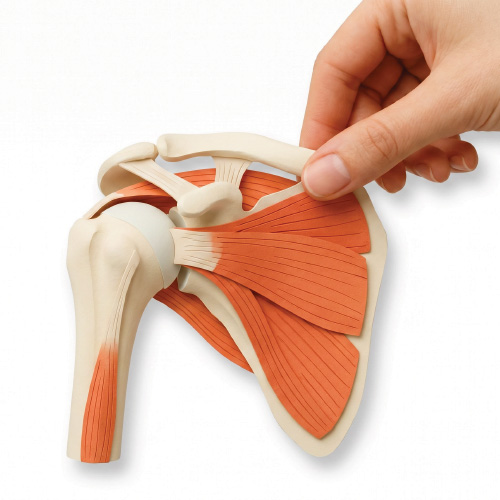
The condition develops when the capsule of connective tissue that wraps around your shoulder thickens and tightens, restricting the joint. However, researchers aren’t entirely clear why this happens. Certain factors can increase your risk:
- Being a woman between the age of 40 and 60 years old
- Having certain diseases, including diabetes, thyroid conditions, or cardiovascular disease
- Immobilizing your shoulder after an injury or surgery
Understanding the Three Phases Of Frozen Shoulder
One reason frozen shoulder recovery can take so long is that the condition progresses through three distinct phases, each with its own set of symptoms and concerns. Here’s what you need to know about each one:
Freezing Phase
This initial stage is marked by increasing pain and stiffness in the shoulder. During this phase, we focus on maintaining your shoulder’s range of motion to help reduce stiffness and improve comfort.
Duration
Anywhere from six weeks to nine months
Symptoms
- A gradual onset of pain that worsens with movement
- Increased stiffness in the shoulder
- Pain is often worse at night, disrupting sleep
Frozen Phase
The frozen stage involves less pain but greater stiffness, significantly restricting your shoulder’s movement. We’ll focus on improving your shoulder’s mobility using stretching or manual therapy techniques.
Duration
Anywhere from four to six months
Symptoms
- Decreased pain compared to the freezing stage
- Significant stiffness and difficulty moving the shoulder
- Everyday movements like reaching overhead or behind the back become challenging
Thawing Phase
In the final stage, your pain decreases, and your shoulder’s range of motion gradually returns. However, it’s important to continue physical therapy to ensure you make a full recovery.
Duration
Anywhere from six months to two years
Symptoms
- Gradual improvement in mobility as scar tissue around the shoulder capsule begins to loosen and break down
- Pain continues to decrease
Physical Therapy and Frozen Shoulder: What You Need to Know
Physical therapy plays an essential role in helping you manage frozen shoulder symptoms at all three stages. Our team will work with you to develop a comprehensive treatment program, pulling from a range of different techniques based on your current symptoms:
Acute Pain Management
We’ll help you manage shoulder pain (especially in the freezing phase) with techniques such as dry needling, Kinesio taping, hot and cold therapy, and more.
Manual Therapy
Various hands-on techniques can gently mobilize the shoulder joint, improve joint capsule movement, and reduce pain.
Mobility Exercises
Targeted exercises and techniques help improve your shoulder’s range of motion in all directions, gradually restoring your ability to reach, lift, and rotate your arm.
Strengthening Exercises
Strengthening the muscles surrounding the shoulder joint enhances stability and supports improved function.
Management Strategies
Understanding frozen shoulder is an integral part of managing it. We’ll help you navigate the difficulties of the condition, including identifying which stage you’re in and providing you with home exercises to help alleviate your symptoms.
Ready to Break Free From the Icy Grip of Frozen Shoulder?
If you suspect you have frozen shoulder, schedule an appointment at Nestor Physical Therapy. Physical therapy is essential for managing the condition in all three phases, and the earlier you can begin treatment, the better your outcomes will be. Our team is here to help you manage pain, restore mobility, and understand your shoulder’s movement patterns.
Don’t let frozen shoulder hold you back. Call us today to schedule your initial evaluation!
Get Started with PT Now!
Return to Nestor Physical Therapy and Let’s Continue Your Journey to Wellness Together. Schedule Your Appointment Now!

Grilled Chicken Salad
Grilled chicken salad is a summertime favorite for my wife and me. It is easy to make and can even be made with leftover chicken. I have made it with leftover rotisserie chicken, chicken thighs, and leftover chicken kabobs. The grilled chicken salad is perfect for lunch; we have taken it to the beach and even had it for dinner on a hot summer night. Here is how it all comes together.
I start by heating up the gas grill to medium-high heat. While the grill heats up, I generously season chicken breasts with my homemade barbecue rub. Once the grill is hot, I sear the chicken breast on one side for three to four minutes. I then flip the chicken breast and sear the other side and cook for an additional three to four minutes. Cooking times will vary based on the size and type of chicken you are cooking (breast vs thigh). I then move the chicken to the cool side of the grill without any flame under the chicken breast to finish cooking via indirect grilling. Indirect grilling means no flame directly under the food. This allows me to finish cooking the chicken with minimal risk of burning or drying it out. Once the temperature of the chicken reaches 165 on an instant-read thermometer, I remove the chicken from the grill and place it on a wire rack over a sheet pan.
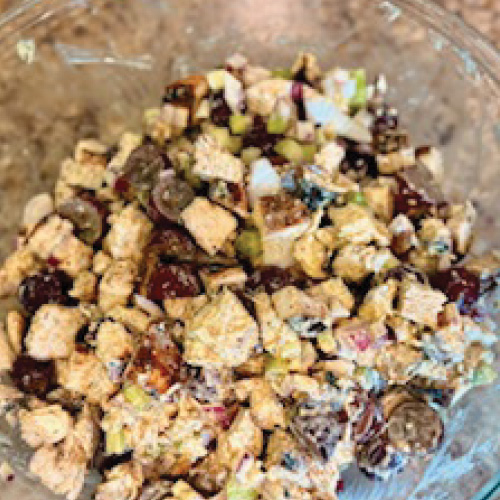
While the chicken cooled, I prepared the rest of the ingredients. The amount of the other ingredients is based on how much chicken you cook. I used three large chicken breasts, so I finely diced half of a large red onion, finely diced six pieces of celery, and halved a cup and a half of red grapes. I cubed the three chicken breasts and added it to a bowl to mix with red onion, celery, and grapes. To finish the chicken salad, I mixed in one teaspoon of my homemade barbecue rub, ¼ cup of Dijon mustard, and 1/4 cup of mayo. Feel free to add more Dijon mustard or mayo to your liking. I use Dijon mustard because it adds a nice zing to the salad and it cuts the amount of mayo required. You can eat the chicken salad right away, but I think it tastes better after it has sat in the refrigerator for a few hours.
I like to put the grilled chicken salad in a roll-up and serve it with chips and a pickle. My wife likes to serve it over a green salad. It is delicious on its own right out of the bowl. Searing the chicken creates a tasty crust that boosts the flavor of the chicken salad. The celery and onion add crunch that balances the tender chicken. The red grapes provide a nice freshness to the chicken salad. Feel free to play with the ingredients to make it your own. You could spice up the chicken salad by using a jerk or blackening seasoning on the chicken. Or for an alternate flavor profile, season the chicken with salt, pepper, and oregano, swap the mustard and mayo for Greek yogurt or tzatziki sauce, and swap the celery with diced and seeded cucumber and fresh mint. Enjoy!



6 Tips For a Healthy Diet This Summer
Your diet affects many aspects of your well-being, including your immune system, bone health, muscle function, inflammation, and pain. Conditions including heart disease and diabetes, are also impacted by dietary intake. In summer, it can be difficult to keep good nutrition at the forefront especially with barbeques and cookouts popping up everywhere you look! Here are 6 nutrition tips to help you maintain a healthy diet this season:
1. Swap out snacks for fruits and vegetables. Consume at least 5 portions of a variety of fruits and vegetables daily. If this sounds challenging, remember that fresh, frozen, canned, dried, or even juiced fruits and veggies are all options.
2. Replace steak with fish. Fish is a great source of protein and contains many vitamins and minerals. You should try to incorporate at least 2 servings of fish into your diet every week.
3. Reduce your saturated fat intake. Too much saturated fat can raise your blood cholesterol levels, increasing your risk of developing heart disease. Examples of food high in saturated fat includes fatty cuts of meat, sausages, butter, hard cheeses, cream, cakes and biscuits.
4. Cut down on sugary drinks. Drinks high in sugar contribute to obesity and tooth decay. Try opting for a cool, refreshing glass of water instead, or a tasty fruit smoothie!
5. Drink enough water. Proper hydration is always important, but even more so during hot weather. You should aim for 6 to 8 glasses of water a day.
6. Don’t skip breakfast. A healthy breakfast sets the tone for your day and gives you the energy you need to make it to lunch!
We hope these tips will help you navigate the season and prioritize your health this summer!

What We Treat at Nestor PT!
At Nestor Physical Therapy, we treat a wide range of conditions—from back, neck, and joint pain to balance disorders, chronic pain, vertigo, TMJ dysfunction, and more. Whether you’re recovering from surgery, managing a neurological condition, dealing with arthritis or fibromyalgia, or healing from a sports, work, or car accident injury, our expert team is here to help. We also offer specialized care for headaches, poor posture, pelvic pain, and pre-surgical physical therapy to prepare your body for success.
Our Services:
- Back Pain
- Neck Pain
- Hip Pain
- Foot Pain
- Elbow Pain
- Hand Pain
- Balance Disorders
- Chronic Pain
- Vertigo
- Headaches & Migraines
- Neurological Conditions
- Poor Posture
- Post-Surgical Rehabilitation
- TMJ Dysfunction
- Sciatica
- Shoulder Pain
- Knee Pain
- Ankle Pain
- Wrist Pain
- Arthritis
- Gait Disorders
- Dizziness
- Fibromyalgia
- Motor Vehicle Accident Injuries
- Pelvic Pain
- Pre-Surgical Physical Therapy
- Sports Injuries
- Work Injuries
Thank You’s
High fives all around to all Nestor Physical Therapy patients and friends who participated in our “Refer a Friend” program last month!
Patient Success Spotlights
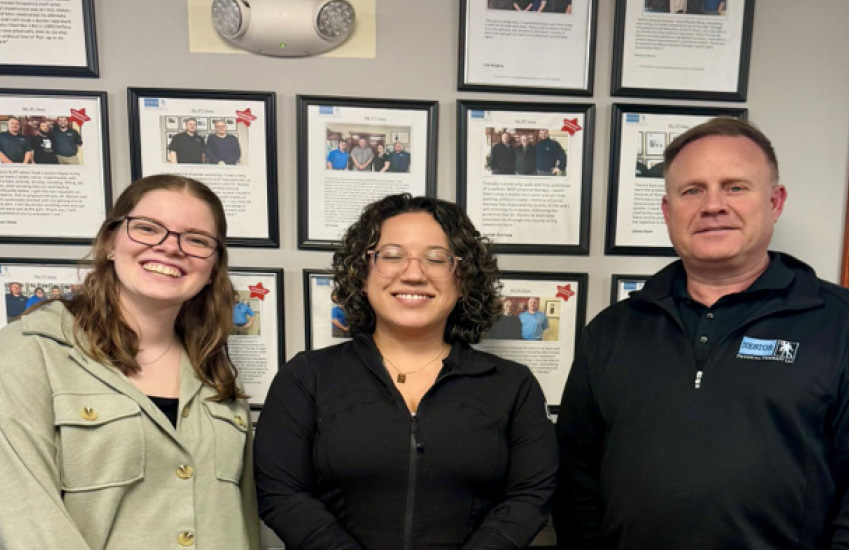
“I had been dealing with knee pain and subluxations for over 20 years before reinjuring and needing surgery. Immediately after surgery I booked my first appointment with Dr. Nestor and his team and it was the best thing I could have done for myself. The recovery process has been humbling. I struggled with everything from standing up to basic hygiene. I worried I may never be active again. Even stairs were terrifying. Dr. Nestor, Alissa, Lauri and Jake were patient, compassionate, knowledgeable, and friendly. They made recovery less intimidating by setting small goals and celebrating achievements. They took the time to educate me about my anatomy, my injury, and the science behind my recovery plan. I’m proud to say that I am active and independent again and my knee feels more stable now than it did at 17!”
–Keala R.

“Thank you to the amazing team at Nestor Physical Therapy. Everyone took the time to help me after my foot surgery with professional and caring support. They relieved my pain and got me moving again, allowing me to enjoy the activities I love.”
-Marissa D.

Ergonomic Tips for Good Shoulder Health
Ergonomics focuses on creating safer, healthier, and more efficient work environments. Whether you spend your day behind a desk or performing physical labor, poor workplace habits can place unnecessary stress on your shoulders, neck, and spine.
At Nestor Physical Therapy, our team evaluates your entire movement system—not just the shoulder joint. Our certified McKenzie therapists use targeted assessments and personalized treatment strategies to identify the root cause of your symptoms and help you move with greater comfort and confidence.
Simple Ergonomic Adjustments That Make a Big Difference
For Office Workers
- Adjust your desk and chair so your elbows remain at a comfortable 90-degree angle.
- Keep your keyboard and mouse close together to avoid reaching forward repeatedly.
- Position your monitor so the top of the screen sits at or just below eye level.
- Take regular posture breaks to stretch, reset, and reduce muscle tension.
For Manual Labor Jobs
- Use equipment and positioning devices to bring materials closer to your body.
- Avoid bending at the torso when lifting whenever possible.
- Limit repetitive overhead lifting and keep loads close to your body.
- Take regular breaks to minimize fatigue from repetitive movements.
- Warm up before work to prepare your shoulders, back, and spine for activity.
Your Spine Matters, Too
Shoulder pain doesn’t always originate in the shoulder itself. Posture, spinal mobility, muscle imbalances, and repetitive movement patterns can all contribute to discomfort. Addressing the entire movement system often leads to better long-term outcomes and lasting relief.
Call Nestor Physical Therapy for Personalized Support
Looking to reduce stress on your shoulders throughout the day? Our physical therapists provide personalized ergonomic evaluations, movement assessments, and practical strategies to help you work smarter, move better, and feel your best. Schedule your appointment today to get started.
Show Your Body Some Love This Summer!

Summer is calling—don’t let aches and stiffness hold you back from enjoying it!
Whether you’re hitting the trails, chasing the kids, or diving into your favorite activities, Nestor Physical Therapy is here to keep you moving strong, pain-free, and ready for every sun-soaked adventure.